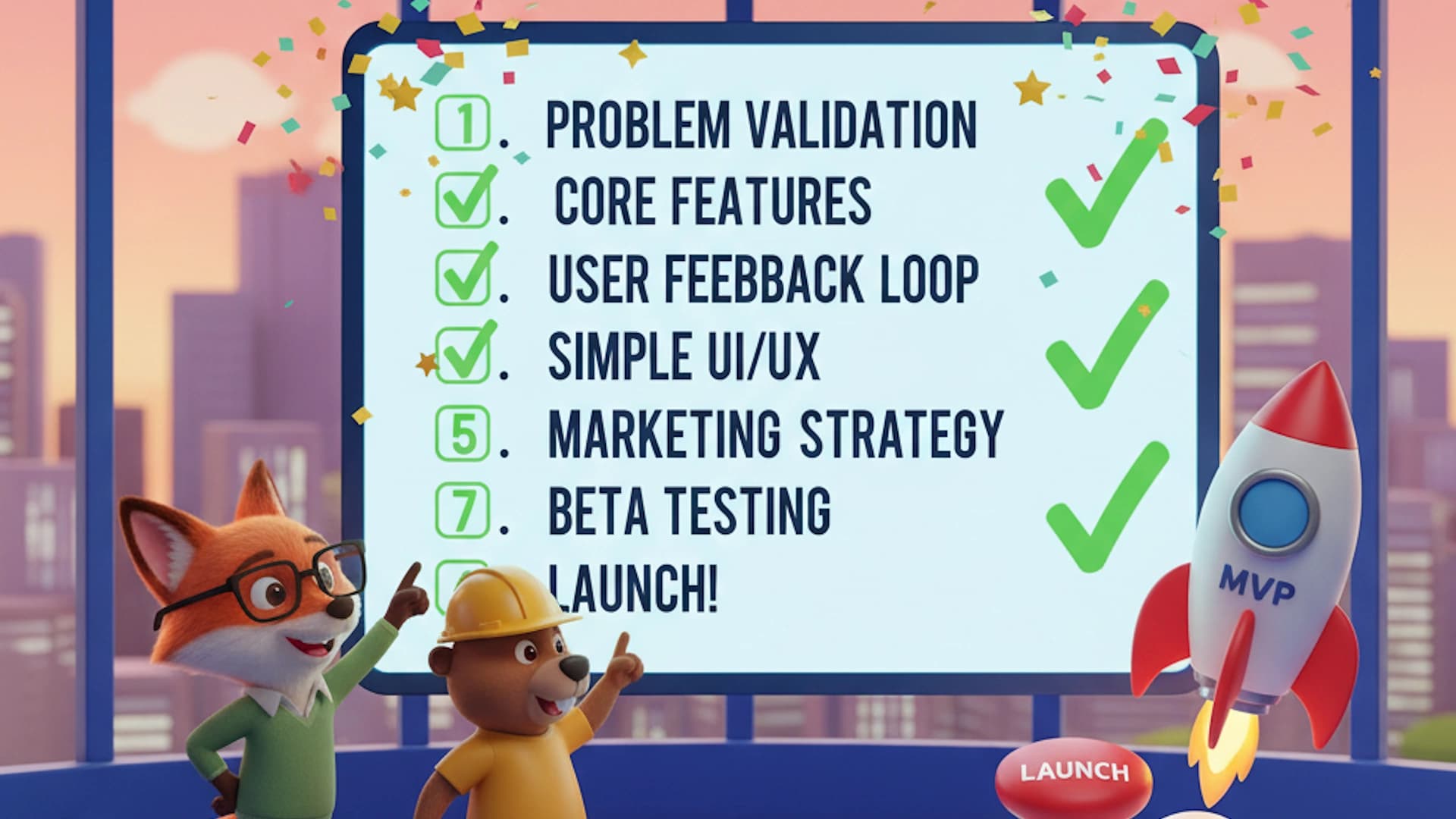

"How much does it cost to build an MVP?" is the first question most founders ask, and the answer they usually get is frustratingly vague. Google it and you'll see numbers ranging from $5,000 to $500,000. That's not a range. That's a shrug.
The truth is that MVP costs depend on a handful of specific factors, and once you understand those factors, the right budget for your situation becomes much clearer. This guide breaks down the real costs by approach so you can stop guessing and start planning. If you're still getting familiar with the basics, start with what every founder should know about building an MVP.
1.
2.
3.
4.
5.
6.
Why MVP Costs Vary So Much
Two MVPs can look similar on paper and cost wildly different amounts. The difference almost always comes down to two things: complexity and who builds it.
Complexity and Feature Count
A simple app that lets users create an account, submit a form, and view a dashboard is a completely different beast from a two-sided marketplace with real-time messaging, payment processing, and admin controls. Every additional feature multiplies the development time. The founders who spend the least are the ones who ruthlessly cut features down to the one thing that proves their idea works.
Who Builds It
An agency with a full team of designers, developers, and project managers costs significantly more than a solo freelancer, which costs more than building it yourself with no-code tools. Each approach comes with different trade-offs in cost, speed, quality, and risk. Not sure if you even need a full MVP yet? Read about the differences between a proof of concept, MVP, and landing page to figure out the right starting point.
The Four Main Ways to Build an MVP (and What Each Costs)
Here's an honest look at the four most common paths founders take, along with what you can realistically expect to spend.
Traditional Development Agency ($40,000–$250,000+)
This is the route that gives you the most polish and the biggest bill. Agencies typically assign a project manager, multiple developers, a designer, and a QA specialist to your project. Development takes 3 to 6 months, and you get a professionally built product with thorough documentation.
The downside is obvious: cost. Most early-stage founders don't have $40,000 or more to spend before they've validated whether anyone wants what they're building. Agencies are best suited for funded startups with complex technical requirements. For a deeper comparison, read about outsourcing your MVP vs. hiring in-house.
Freelancers and Small Teams ($10,000–$60,000)
Hiring a freelance developer or a small team is more affordable than an agency and offers more flexibility. Expect a timeline of 2 to 4 months for a moderately complex MVP.
The risk here is consistency. Quality varies enormously across freelancers, and without technical knowledge yourself, it's difficult to evaluate whether you're getting clean, maintainable code or a fragile mess that will cost twice as much to fix later. You'll also need to manage the project yourself, which takes more time than most non-technical founders expect. Learn more about why outsourcing your MVP can save you months of work if you're weighing this option.
No-Code and Low-Code Tools ($500–$5,000)
Platforms like Bubble, Webflow, and Glide let you build functional prototypes without writing code. For simple products, you can go from idea to working prototype in 1 to 4 weeks at minimal cost.
The limitations are real though. Customization is constrained by what the platform supports. Performance and scalability hit a ceiling quickly. And you're locked into the platform's ecosystem, which means if your product takes off, you'll likely need to rebuild from scratch on custom code. No-code is excellent for testing whether anyone cares about your idea. It's less ideal for building the actual product you'll scale with.
Specialized MVP Studios ($1,500–$10,000)
This is a newer category that's grown specifically to serve non-technical founders. MVP studios focus exclusively on building lean, functional products quickly, typically in 2 to 4 weeks. They strip away the overhead of traditional agencies while delivering custom code you actually own.
Because these studios build MVPs every day, they've optimized their process for speed and cost efficiency. You get a working product built with real code, not a no-code prototype, at a fraction of agency pricing. The trade-off is scope. These studios work best when your MVP is focused on validating one core idea rather than building a feature-rich platform.
Want more to read?
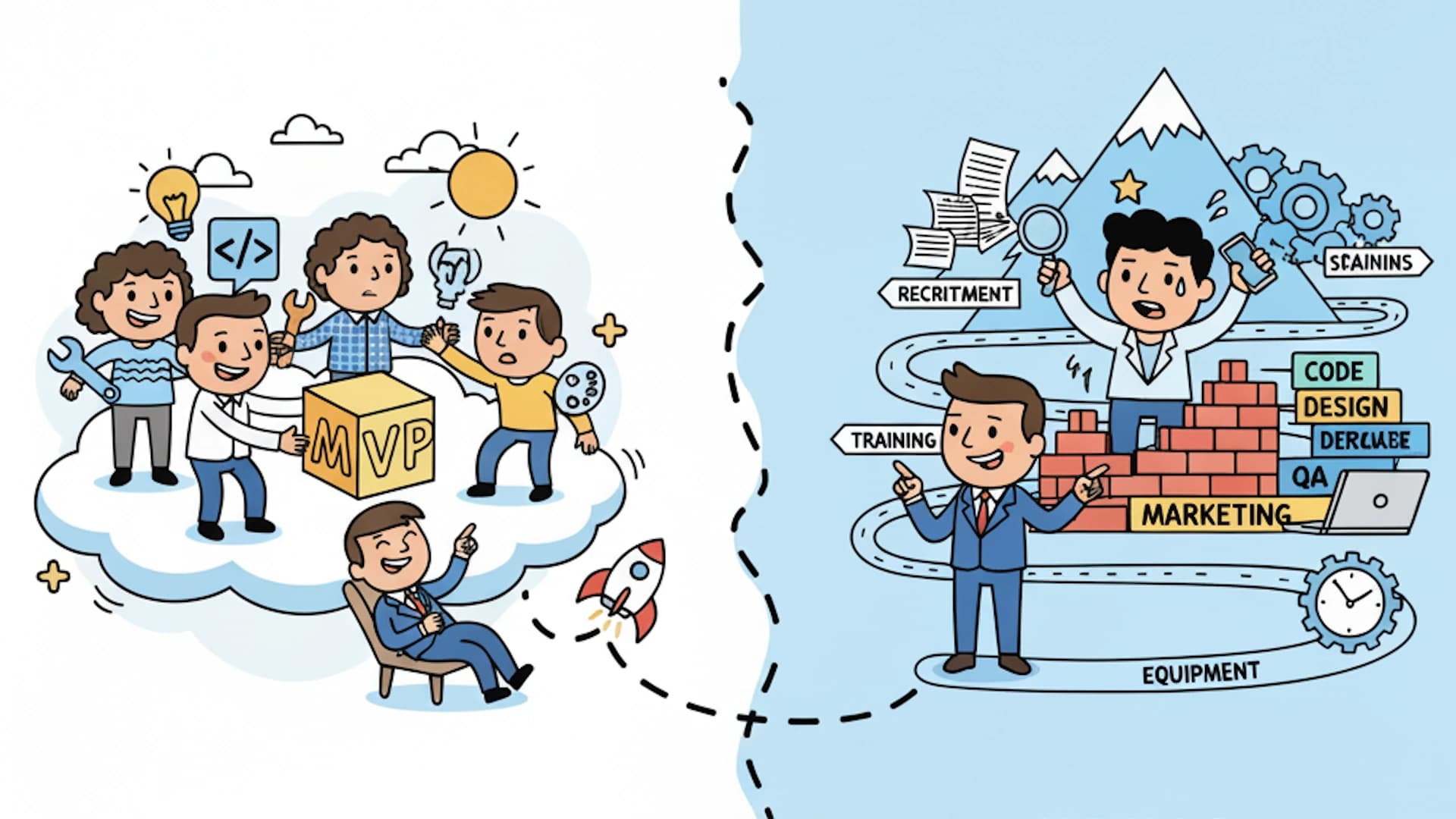
Outsourcing Your MVP vs. Hiring In-House
Compare the real costs of outsourcing vs. hiring in-house for your MVP. A complete breakdown of expenses, timelines, and when each approach makes sense.
 Read More
Hidden Costs Most Founders Forget
The development quote is never the full picture. These are the costs that catch founders off guard after they've already committed.
Design and Branding
Some development quotes include UI/UX design. Many don't. If your quote only covers development, you'll need to budget separately for logo design, brand identity, and interface design. Depending on the designer, this adds $1,000 to $10,000 to your total cost. Always ask what's included before signing anything.
Third-Party Services and APIs
Your MVP doesn't run in a vacuum. Hosting, authentication providers, payment processing, email delivery, analytics tools, and cloud storage all carry monthly costs. For a typical MVP, expect to spend $50 to $500 per month on infrastructure and third-party services. These costs are small individually but add up, and they start the moment you launch.
Post-Launch Iteration
Launching is not the finish line. Real users will find bugs you missed, request features you hadn't considered, and use your product in ways you didn't expect. Budget roughly 15 to 25 percent of your initial build cost per month for the first three months after launch. This covers bug fixes, performance improvements, and the most critical user-requested changes. For a structured approach to this phase, read about how to collect feedback that shapes your MVP into a real product.
How to Decide What Your MVP Should Cost
Knowing the price ranges is useful, but the real question is what makes sense for you specifically.
Start With the Problem, Not the Features
The most expensive MVPs are usually the ones where founders started by listing every feature they could imagine. Instead, start with the one core problem you solve and build only what's needed to prove your solution works. If you can validate your idea with a landing page and a waitlist, that's a $799 problem, not a $50,000 one. Learn how to go from concept to launch in weeks by staying focused on what matters.
Match Your Budget to Your Stage
If you're a pre-revenue founder working with personal savings, your MVP budget should be under $5,000. Your goal at this stage is validation, not perfection. Spend the minimum needed to learn whether real people want what you're building.
If you've raised a pre-seed or seed round, you have more flexibility but still shouldn't overbuild. Investors want to see traction and learning speed, not a feature-complete product. A lean MVP that generates user feedback and early revenue is worth more to your next fundraise than a polished product with no users.
Want more to read?
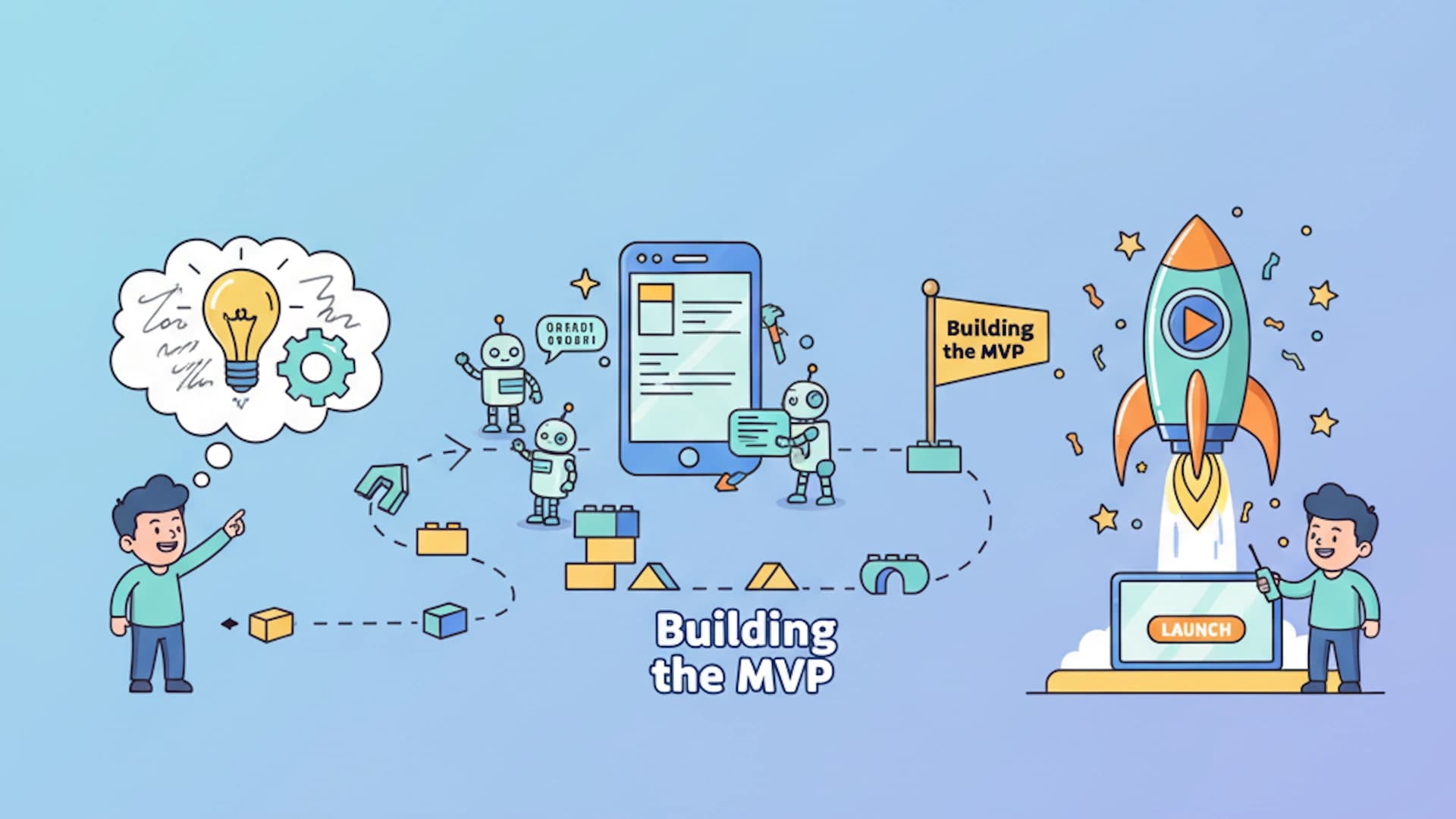
From Idea to MVP: How to Go from Concept to Launch in Weeks
Learn how to turn your startup idea into a working MVP in weeks by validating your concept, building fast, and launching with confidence to real users.
A Smarter Way to Think About MVP Investment
The goal of an MVP isn't to spend the least money possible. It's to learn the most per dollar spent. An MVP that costs $2,000 and tells you nobody wants your product just saved you $200,000 and a year of your life. An MVP that costs $200,000 and tells you the same thing was a disaster.
This is the mindset shift that separates founders who build successful companies from those who run out of runway before they learn anything useful. Invest enough to get a clear answer from the market, then decide whether to double down or pivot.
At PremierMVP, this is exactly how we approach it. A full MVP starts at $1,999 and ships in 14 to 20 days. A landing page starts at $799 and ships in 7 to 12 days. Both are designed to get you in front of real users as fast as possible so you can start learning. You own 100% of the code. For a deeper look at why this approach works, read about why founders who invest in an MVP early save time and money later.
Final Thoughts
MVP development costs range from a few hundred dollars to hundreds of thousands, but for most non-technical founders validating an idea, you don't need to spend six figures. Start lean. Pick the approach that matches your stage and budget. Validate fast. Then invest more only after you have proof that customers want what you're building.
The most expensive mistake isn't choosing the wrong development approach. It's spending months and thousands of dollars building something nobody asked for. Whatever you spend, make sure it buys you answers.
Have a business idea you want to bring to life? Book a call today with PremierMVP.
Want more to read?
The Essential Checklist for Your First Startup MVP Launch
Launch your first MVP with confidence using this checklist that covers problem focus, feedback, metrics, and strategy to help you save time and learn faster.