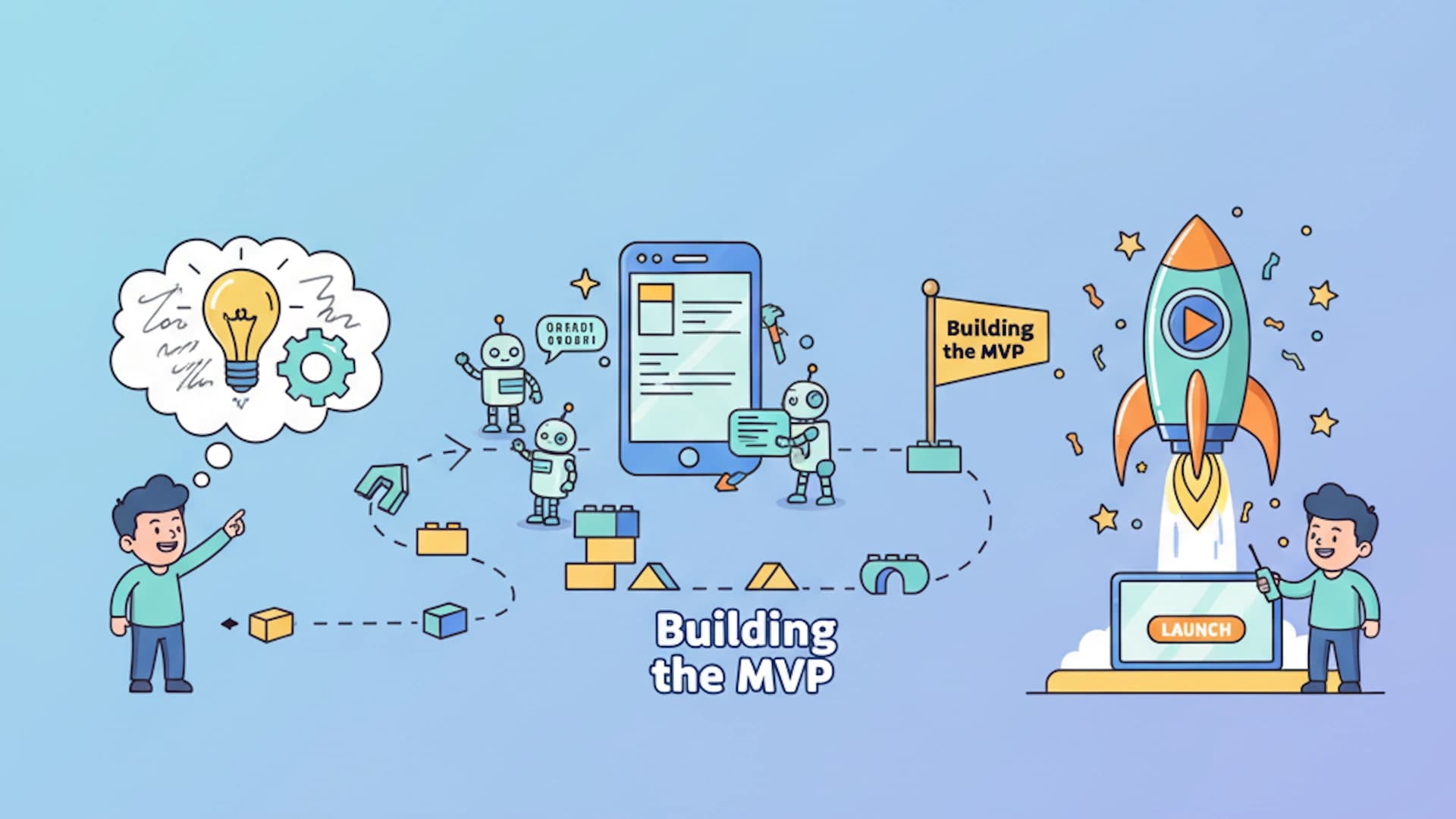
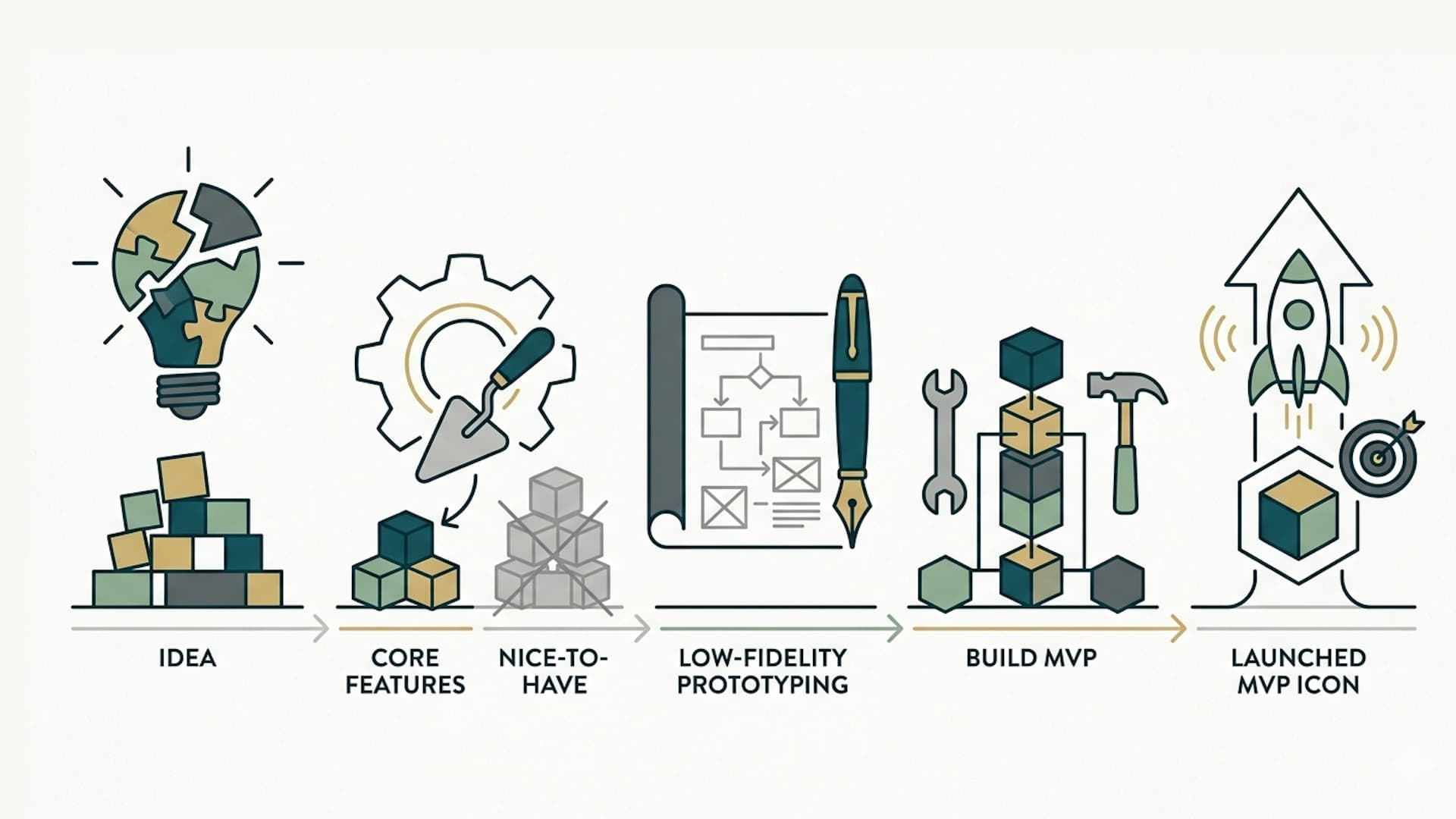
You have a business idea you believe in, but you don't write code and you don't have a technical co-founder. This is one of the most common situations in the startup world, and it stops far too many good ideas from ever reaching real users. The good news is that not being technical is not a dealbreaker. Airbnb, Groupon, and Zappos were all started by non-technical founders. What matters is knowing your options, making smart decisions about how to build, and moving fast enough to learn before your runway runs out. If you're still getting familiar with the fundamentals, start with what every founder should know about building an MVP.
1.
2.
3.
4.
5.
6.
7.
8.
Why Being Non-Technical Is Not a Disadvantage
There's a persistent myth in startup culture that you need to be a developer to build a tech company. It's simply not true. The founder's primary job is to deeply understand the problem, know the customer, and make decisions about where to focus. Those are skills that have nothing to do with writing code.
Technical skills can be hired, contracted, or partnered with. Market insight, customer empathy, and the ability to sell a vision cannot. The founders who struggle most are not the ones who lack coding skills. They're the ones who don't know their customer well enough to decide what to build first.
Your job is not to become a developer. Your job is to figure out the fastest path from idea to something real that people can use and react to. The rest of this guide shows you how.
Clarify Your Idea Before Anything Else
Before you think about tools, developers, or budgets, you need clarity on two things: what problem you're solving and whether anyone actually cares.
Define the Problem, Not the Product
Most founders start by describing their product. "It's an app that does X, Y, and Z." That's backwards. Start with the problem. Write a single sentence that describes the pain point your target customer experiences. If you can't do that clearly, you're not ready to build anything yet.
A well-defined problem sounds like this: "Freelance designers waste hours every week chasing unpaid invoices because their clients forget to pay on time." Notice there's no mention of features, technology, or even a product. Just a clear, specific pain point experienced by a specific group of people.
Validate Demand Without Writing Code
Once you've nailed the problem, prove that people care about a solution before spending money on development. You can do this without writing a single line of code. Create a simple landing page that explains your concept and includes a call to action like "Join the waitlist" or "Get early access." Share it in the communities where your potential customers spend time.
If people sign up, you have evidence that the problem resonates. If they don't, you've saved yourself thousands of dollars and months of wasted effort. Our guide on how to use landing pages to validate startup ideas before you build walks through this step in detail, and how to build an MVP landing page that validates your idea covers the tactical setup.
Decide What to Build First
PoC vs. Landing Page vs. MVP
Not every idea needs a full MVP right away. Sometimes a landing page is enough to test demand. Sometimes a proof of concept is the right move to test whether the technology works. Understanding which stage you're at prevents you from overbuilding too early. Read about what's best for your first launch to figure out your starting point.
Ruthlessly Prioritize Features
This is where non-technical founders get into the most trouble. It's natural to want your product to do everything from day one, but every feature you add increases the cost, extends the timeline, and delays the moment you get real feedback from real users.
Ask yourself one question for every feature on your list: "Can we launch without this?" If the answer is yes, cut it. Your MVP should do one thing exceptionally well. One. Not three, not five. The founders who launch fastest and learn the most are the ones who resist the urge to build everything at once. For more on this, read about the most common MVP pitfalls founders make and how to avoid them.
Want more to read?
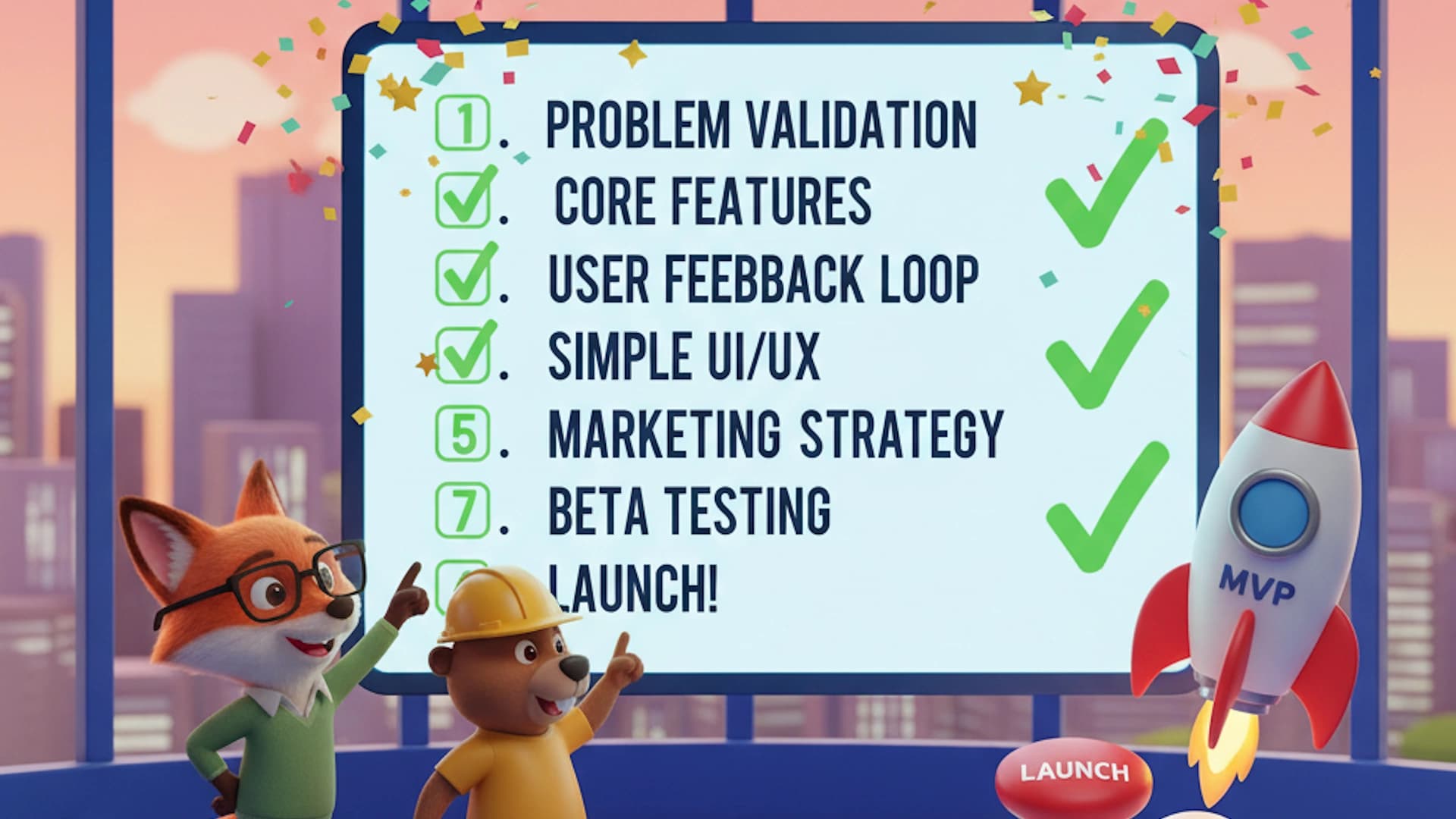
The Essential Checklist for Your First Startup MVP Launch
Launch your first MVP with confidence using this checklist that covers problem focus, feedback, metrics, and strategy to help you save time and learn faster.
 Read More
Your Options for Actually Getting It Built
Here's an honest breakdown of the four paths available to you, with the trade-offs that matter most when you don't have a technical background.
No-Code and Low-Code Tools
Platforms like Bubble, Webflow, and Glide let you build functional products without writing code. For very simple ideas, you can go from concept to working prototype in one to four weeks for as little as a few hundred dollars.
The appeal is obvious: low cost, fast start, and you maintain full control. But the limitations are real. Customization is constrained by what the platform supports. Performance hits a ceiling quickly. You're locked into the platform's ecosystem, so if your product takes off, you'll likely need to rebuild from scratch. No-code is great for testing whether anyone cares about your concept. It's less ideal as the foundation for a product you plan to scale.
Hiring a Freelancer
A freelance developer or small team costs between $10,000 and $60,000 for a moderately complex MVP, with timelines of two to four months. This is more affordable than an agency and gives you more flexibility.
The risk for non-technical founders is significant though. Quality varies enormously across freelancers, and without technical knowledge, it's nearly impossible to evaluate whether you're getting clean, maintainable code or a fragile mess that will cost twice as much to fix later. You'll also need to manage the project yourself, which takes more time and energy than most founders expect. For a deeper comparison of approaches, read about outsourcing your MVP vs. hiring in-house.
Traditional Development Agency
Agencies assign full teams to your project: project managers, designers, multiple developers, and QA specialists. You get the most polish and the biggest bill, typically $40,000 to $250,000 or more with timelines of three to six months.
For most non-technical founders at the idea validation stage, this is overkill. You're paying for a production-quality product before you've confirmed that anyone wants it. Agencies make sense for funded startups with complex requirements, but they're rarely the right first step.
Specialized MVP Studio
This is the path specifically designed for founders in your position. MVP studios focus exclusively on building lean, functional products quickly, typically in two to four weeks. They strip away agency overhead while delivering custom code you actually own.
Because these studios build MVPs constantly, they've optimized every part of the process for speed and cost efficiency. You get a working product built with real code at a fraction of agency pricing. The trade-off is scope. MVP studios work best when your product is focused on validating one core idea rather than building a feature-rich platform. For a full cost comparison across all four approaches, read how much does it cost to build an MVP.
How to Work With Developers When You Don't Code
Regardless of which path you choose, at some point you'll need to communicate with someone technical. Here's how to do that effectively without pretending to be something you're not.
Learn Enough to Communicate, Not to Build
You don't need to learn to code. You need to understand a handful of concepts so you can have productive conversations. Know what frontend and backend mean. Understand that an API connects different systems. Know that a database stores your users' information. Understand what deployment means and what hosting costs.
This baseline vocabulary lets you ask the right questions, understand the answers, and make informed decisions. You're not trying to do the developer's job. You're trying to be a good collaborator.
How to Evaluate Technical Partners
Whether you're hiring a freelancer, agency, or MVP studio, look for these signals:
A portfolio of actual MVPs or startup products, not just enterprise software or marketing websites. Fast, clear communication during the sales process, because if they're slow to respond before you've paid them, it only gets worse after. Transparent pricing with a clear scope, not open-ended hourly billing that can spiral without warning. And most importantly, you should own 100% of the code when the project is done.
Red flags include vague timelines, no relevant portfolio, hourly billing with no cap, and any resistance to giving you full ownership of the source code.
Protect Yourself Legally
Before any work begins, make sure the legal fundamentals are covered. You should have a written agreement that clearly states you own all code, designs, and intellectual property produced during the engagement. Use a work-for-hire agreement so there's no ambiguity about ownership. If you're sharing sensitive business details, use an NDA. And always ensure you have direct access to all source code, hosting accounts, and third-party service credentials.
These protections cost very little to set up and save enormous headaches down the road. Do not skip them regardless of how much you trust the person or team you're working with.
Want more to read?
Outsourcing Your MVP vs. Hiring In-House
Compare the real costs of outsourcing vs. hiring in-house for your MVP. A complete breakdown of expenses, timelines, and when each approach makes sense.
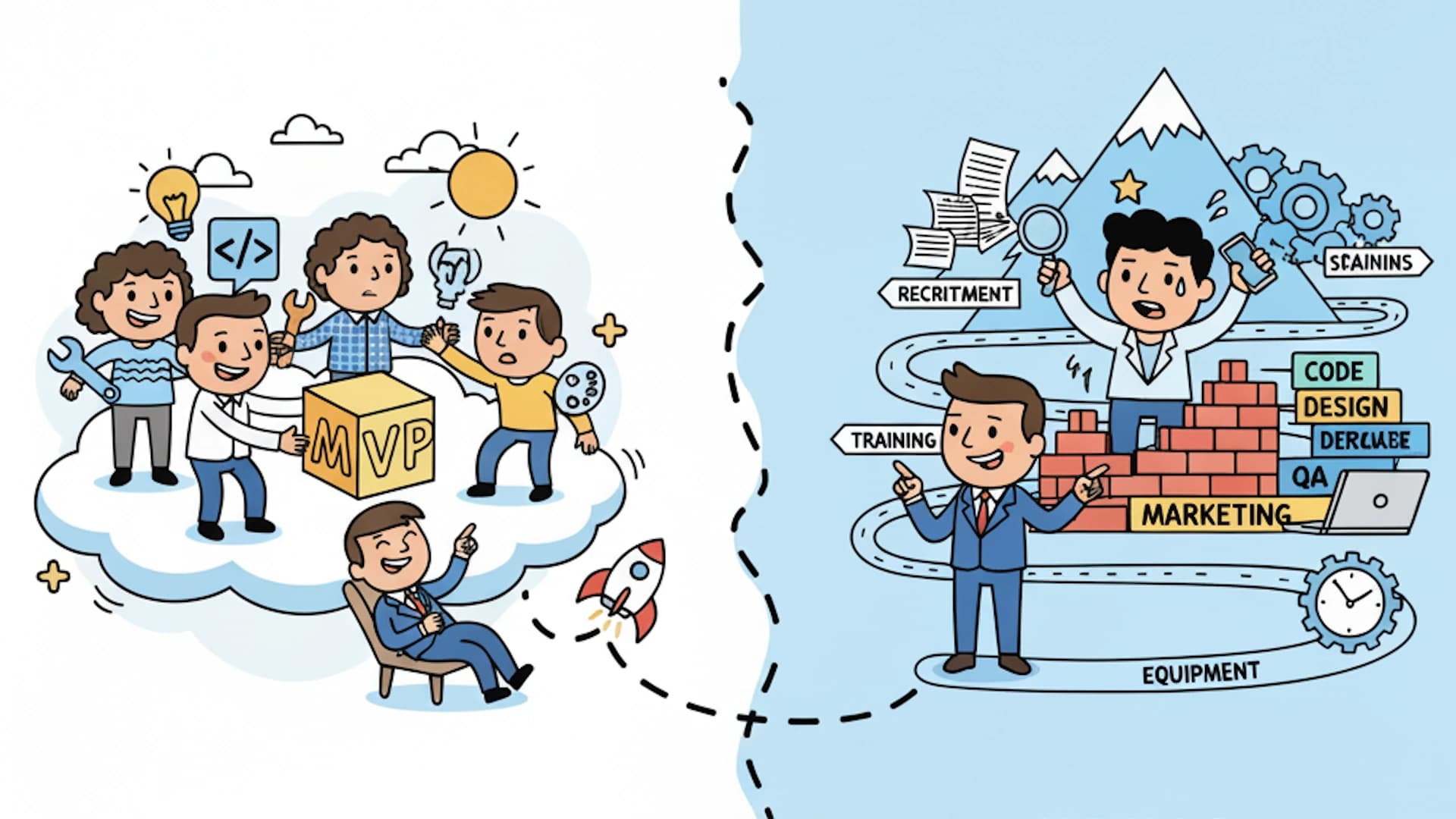
From Build to Launch in Weeks
Set a Timeline and Stick to It
Speed is your greatest advantage as a startup founder. The longer you spend building, the more assumptions go untested and the more money you burn before learning anything. Set a hard deadline for your MVP launch and treat it as non-negotiable. If a feature can't be finished by the deadline, cut it. You can always add it later after you've validated the core idea.
Most MVPs can be built in two to six weeks if you've properly scoped the project and chosen the right development path. If someone is telling you it will take six months, your scope is too big or you're working with the wrong partner. For realistic timelines, read how long does it take to build an MVP.
Prepare Your Launch
A working product is only useful if people can find it and use it. Before launch day, make sure you have a landing page that clearly explains what your product does and who it's for. Set up basic analytics so you can measure what users actually do once they sign in. Create a simple onboarding flow that gets new users to the core value as fast as possible. Our essential checklist for your first startup MVP launch covers everything you need to have in place.
Collect Feedback and Iterate
The moment your MVP is live, your only job is learning. Talk to every user you can. Watch how they use the product. Ask what confused them, what they wished it did, and whether they'd pay for it. This feedback is worth more than any amount of pre-launch planning.
Don't wait for a large user base to start collecting feedback. Five honest conversations with real users will teach you more than a thousand survey responses. Learn how to structure this process in how to collect feedback that shapes your MVP into a real product.
What Comes After Your MVP Launches
Launching is the beginning, not the end. After launch, focus on the metrics that actually matter: are people signing up, are they coming back, and are they completing the key action your product was designed around?
If the numbers are encouraging, double down. Fix the biggest friction points, add the features users are asking for, and start thinking about growth. If the numbers are flat or declining, dig into why. Sometimes the problem is the product. Sometimes it's the audience. Sometimes it's the messaging. The MVP exists to give you data, so use it.
Watch for warning signs that the project is drifting off course. Scope creep, missed milestones, and vanity metrics that look good but don't reflect real engagement are all common traps. Our guide on seven signs your MVP development project is going off track helps you catch these early. And for a broader perspective on why this lean approach pays off, read about why founders who invest in an MVP early save time and money later.
Final Thoughts
Being a non-technical founder is not a barrier to building a successful product. It's a different starting point, not a disadvantage. The founders who succeed are the ones who validate before they build, keep their MVP ruthlessly focused, choose the right development path for their stage and budget, and move fast enough to learn from real users.
At PremierMVP, we built our entire business around helping non-technical founders do exactly this. A full MVP starts at $1,999 and ships in 14 to 20 days. A landing page starts at $799 and ships in 7 to 12 days. You own 100% of the code. No equity, no hidden fees, no six-month timelines. Just a working product in your hands so you can start learning whether your idea has legs.
Have a business idea you want to bring to life? Book a call today with PremierMVP.
Want more to read?
From Idea to MVP: How to Go from Concept to Launch in Weeks
Learn how to turn your startup idea into a working MVP in weeks by validating your concept, building fast, and launching with confidence to real users.