Google "MVP development" and you will find prices ranging from $0 to $250,000+. Timelines range from an afternoon to six months. And most comparison articles are written by agencies trying to sell you their $50,000 package.
This guide is different. It is an honest breakdown of every option available to non-technical founders in 2026, what each actually costs, and which one makes sense depending on your budget and stage. If you are still getting familiar with the basics, start with what every founder should know about building an MVP.
1.
2.
3.
4.
5.
6.
7.
8.
Premium MVP Development Agencies
Typical cost: $24,000 to $250,000+ Timeline: 3 to 6 months
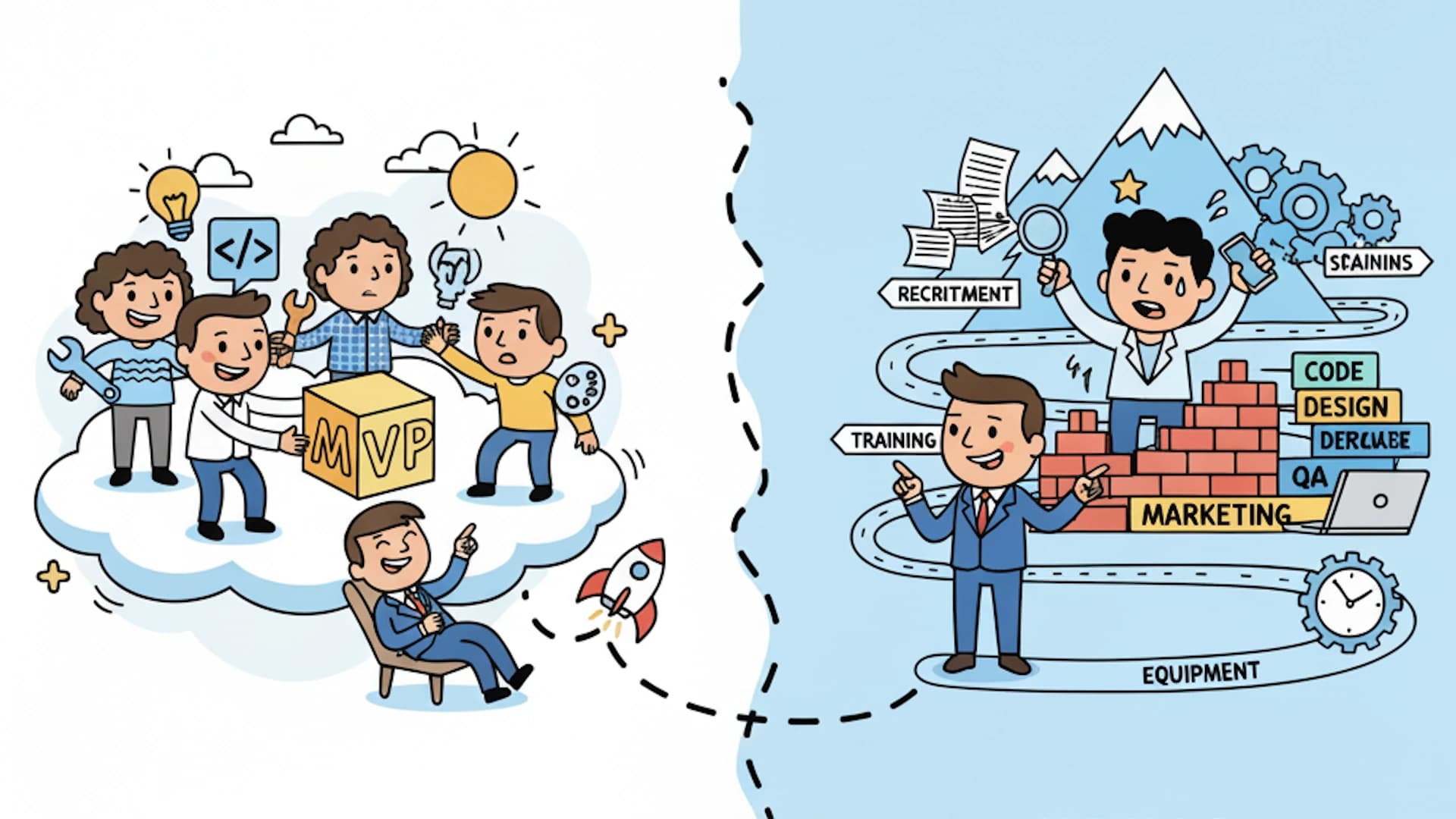
This is the traditional route and the one with the biggest price tag. Agencies like Purrweb, Designli, and Thoughtbot assign full teams to your project — project managers, multiple developers, designers, and QA specialists. You get a polished product with thorough documentation, design systems, and professional project management.
Purrweb has shipped over 550 MVPs with average costs between $45,000 and $130,000 and a typical delivery time of four months. Designli targets non-technical founders specifically, offering a structured SolutionLab discovery phase and US-based development teams. Thoughtbot brings a design-driven process that produces high-quality user experiences.
When agencies make sense
If you have raised a seed or Series A round and are building a technically complex product — think fintech compliance features, real-time multi-user systems, or enterprise integrations — an agency can be worth the investment. You are paying for reduced risk, deep expertise, and a team that has solved similar problems before.
When they don't
If you are pre-revenue and working with personal savings or a small friends-and-family round, spending $50,000 or more before you have validated product-market fit is a dangerous bet. Most early-stage founders do not need the level of polish an agency delivers. They need a working product that proves the idea works. For a detailed cost comparison of outsourcing options, read about outsourcing your MVP vs. hiring in-house.
Freelancer Platforms: Upwork and Toptal
Typical cost: $5,000 to $60,000+ Timeline: 2 to 4 months
Freelancer platforms offer a middle ground between agency polish and DIY tools. Upwork provides access to developers at $40 to $75 per hour on average, though rates range from $15 to over $100 depending on experience and location. Toptal charges premium rates of $60 to $200+ per hour but vets its talent rigorously, accepting roughly 3 percent of applicants.
The real trade-off for non-technical founders
The biggest challenge with freelancer platforms is not cost. It is management. When you hire a freelancer, you become the project manager. You need to write detailed specifications, evaluate code quality you may not understand, manage timelines, and handle the inevitable miscommunications that come with remote collaboration.
On Upwork, quality varies enormously. Some freelancers deliver excellent work. Others deliver code that looks functional in a demo but falls apart under real usage. Without technical knowledge, it is extremely difficult to tell the difference until it is too late. Toptal reduces this risk through vetting, but you are paying premium rates for the privilege — often $8,000 or more per month for a single developer.
The freelancer route works best for founders who have some technical literacy, can evaluate code quality, and are comfortable managing a development process. If that does not describe you, you are likely to spend more time and money than you expected. Learn more about why outsourcing your MVP can save you months of work if you are weighing this option.
Want more to read?
Outsourcing Your MVP vs. Hiring In-House
Compare the real costs of outsourcing vs. hiring in-house for your MVP. A complete breakdown of expenses, timelines, and when each approach makes sense.
 Read More
AI App Builders and No-Code Platforms
Typical cost: $0 to $500 Timeline: Days to weeks
The AI and no-code landscape has exploded in 2026. Tools like Lovable and Bolt.new generate full working applications from text descriptions — you describe what you want in plain English and get a functional app with a frontend, backend, and database. Platforms like Bubble and Webflow let you build web applications visually without writing code.
These tools are genuinely impressive for certain use cases. Landing pages, waitlist apps, simple directories, and basic CRUD applications can be built in hours instead of weeks. For founders who just want to test whether anyone cares about their idea, this can be the fastest and cheapest path to a working prototype.
The ceiling you will hit
The limitations are real and you will encounter them quickly if your product has any complexity. Customization is constrained by what the platform supports. Performance and scalability degrade as your user base grows. Third-party integrations like payment processing or complex API connections often produce buggy, unreliable results.
The biggest risk is vendor lock-in. Some platforms keep your application on their infrastructure. If they change pricing, shut down, or remove features you depend on, your product is at risk. Even the AI app builders that generate "real code" often produce output that experienced developers describe as fragile — it works in demo conditions but breaks under real-world usage with real users doing unexpected things.
No-code and AI tools are excellent for validating whether anyone wants what you are building. They are less suited for building the product you will scale with. For a deeper look at the AI tool landscape, read about how to use AI to build your startup MVP.
MVP Studios
Typical cost: $499 to $10,000 Timeline: 1 to 4 weeks
This is the category most founders do not know exists, and it is the one that has grown fastest over the past two years. MVP studios are specialized firms that focus exclusively on building lean, functional products quickly. They strip away the overhead of traditional agencies — no account managers, no month-long discovery phases, no bloated teams — and deliver custom code at a fraction of the cost.
Because these studios build MVPs every day, they have optimized their process for speed and cost. They know what corners can be cut safely and which cannot. They have templates, component libraries, and battle-tested architectures that eliminate the setup time that inflates agency projects.
What you get vs. what you give up
You get custom code you own, built with production-ready technology, delivered in weeks instead of months. The trade-off is scope. MVP studios work best when your product is focused on validating one core idea rather than building a feature-rich platform. But for most early-stage founders, that constraint is actually a benefit. It forces the discipline that leads to faster validation and less wasted money.
At PremierMVP, a landing page starts at $499 and ships in 7 to 12 days. A full MVP starts at $999 and ships in 14 to 20 days. You own 100% of the code. No equity, no hidden fees, no six-month timelines. Just a working product built with modern technology that you can scale when the time comes. Learn how to go from concept to launch in weeks with this approach.
Want more to read?
How Much Does It Cost to Build an MVP?
A clear breakdown of MVP development costs — from agencies and freelancers to no-code tools and MVP studios — so you can pick the right path.

Side-by-Side Comparison
| Feature | Premium Agencies | Freelancers | AI / No-Code | PremierMVP |
|---|---|---|---|---|
| Starting Price | $24,000+ | $5,000+ | $0–$500 | $499–$999 |
| Delivery Timeline | 3–6 months | 2–4 months | Days to weeks | 7–20 days |
| Code Ownership | ||||
| Custom Code | ||||
| Best For | Funded startups with complex needs | Technical founders who can manage projects | Quick idea validation | Non-technical founders validating ideas |
| Risk Level | Low (but expensive) | High (quality varies) | Medium (scaling limits) | Low |
| Non-Technical Founder Friendly |
How to Choose the Right Option for Your Stage
The best option depends less on the product you want to build and more on where you are as a founder right now.
Pre-idea or exploring
You have a concept but have not validated it yet. Start with a landing page to test demand before building anything. An MVP studio can have one live in under two weeks for under $500, or you can build one yourself with a no-code tool. Either way, do not build a full product until you have evidence that people want it.
Validated idea, pre-revenue
You have tested your concept and know people are interested. Now you need a working product to put in front of real users. This is the sweet spot for an MVP studio or a focused freelancer. Spend $1,000 to $5,000, get a working product in 2 to 4 weeks, and start collecting real user feedback. For more on matching your approach to your stage, read about what's best for your first launch: POC, MVP, or landing page.
Seed-funded, complex product
You have raised capital and are building something with significant technical complexity. Consider a mid-tier agency or a senior freelancer team. Budget $15,000 to $60,000 and plan for a 2 to 4 month timeline. The investment is justified because your product needs technical depth that cannot be delivered in two weeks.
Series A and beyond
You have product-market fit and are scaling. A premium agency or an in-house team makes sense at this stage. You are no longer validating — you are building for growth, and the investment in quality, process, and documentation pays dividends over time.
What to Watch Out For Regardless of Who You Choose
No matter which path you take, these are the red flags that should make you pause.
No fixed pricing or unclear estimates. If a provider cannot give you a clear price before work begins, you are signing up for scope creep and budget overruns. Fixed-price engagements protect you from the most common way MVP projects go wrong.
No code ownership. Always confirm in writing that you own 100% of the code produced. Some agencies and platforms retain intellectual property rights or restrict how you can use the code after the engagement ends. This can become a serious problem if you raise funding or want to switch providers later.
No timeline commitment. "We will start soon" is not a timeline. Get a specific delivery date and hold your provider to it. Vague timelines are the number one predictor of projects that drag on for months past their expected completion.
No portfolio or references. Ask to see live products they have built and talk to founders who have worked with them. Any reputable provider will be happy to share both. If they cannot, that tells you something important. For more warning signs, read about seven signs your MVP development project is going off track.
Final Thoughts
Most non-technical founders do not need a $50,000 agency to validate their idea. They need a working product in front of real users as fast as possible. The MVP development landscape in 2026 offers more options than ever, and the right choice is the one that matches your budget, your stage, and the level of complexity your product actually requires.
The most expensive mistake is not choosing the wrong development approach. It is spending months and tens of thousands of dollars building something nobody asked for. Start lean, validate fast, and invest more only after you have proof that customers want what you are building. For more on how to think about MVP investment, read about how much does it cost to build an MVP.
Have a business idea you want to bring to life? Book a call today with PremierMVP.
Want more to read?
The Essential Checklist for Your First Startup MVP Launch
Launch your first MVP with confidence using this checklist that covers problem focus, feedback, metrics, and strategy to help you save time and learn faster.