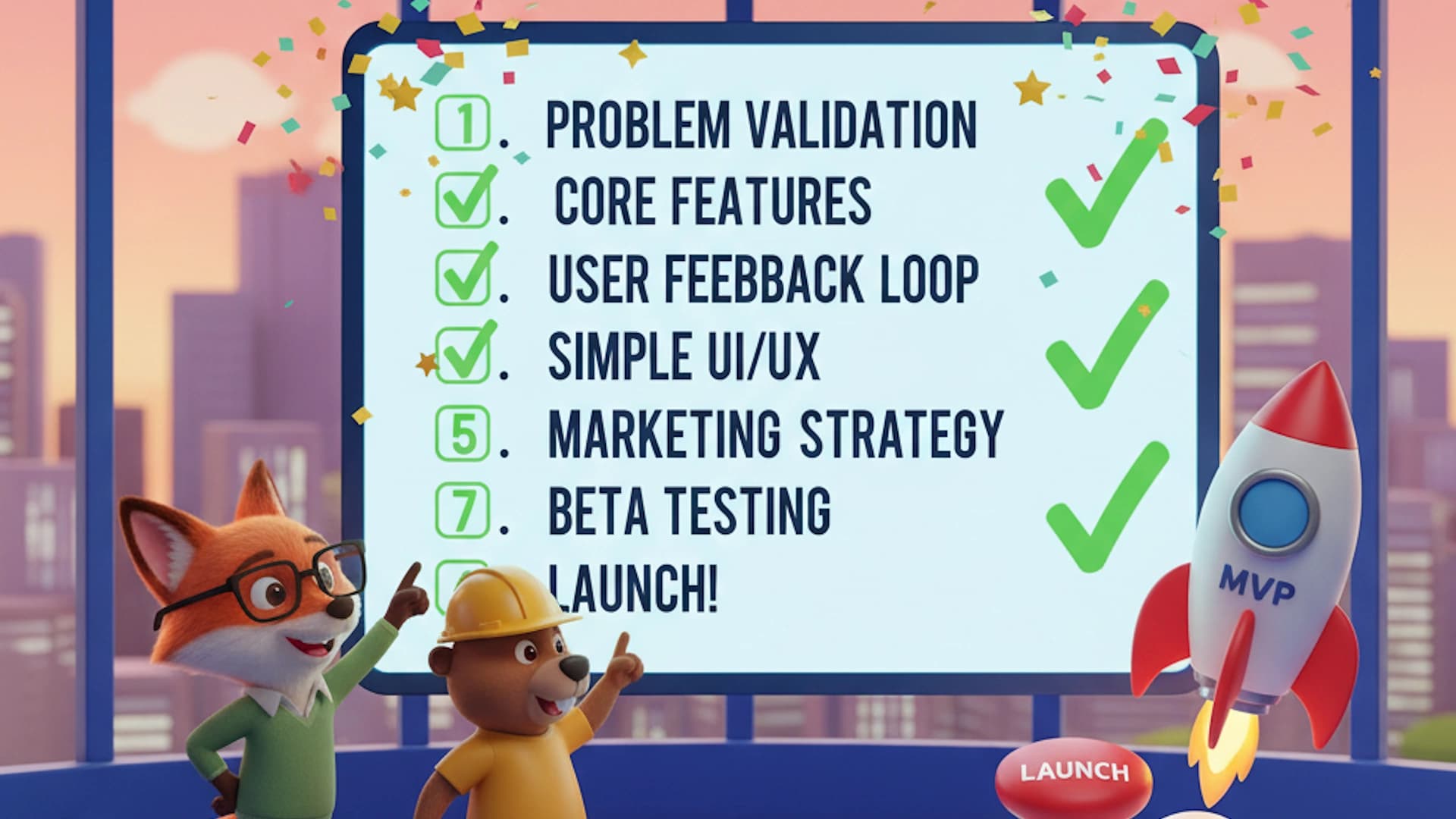
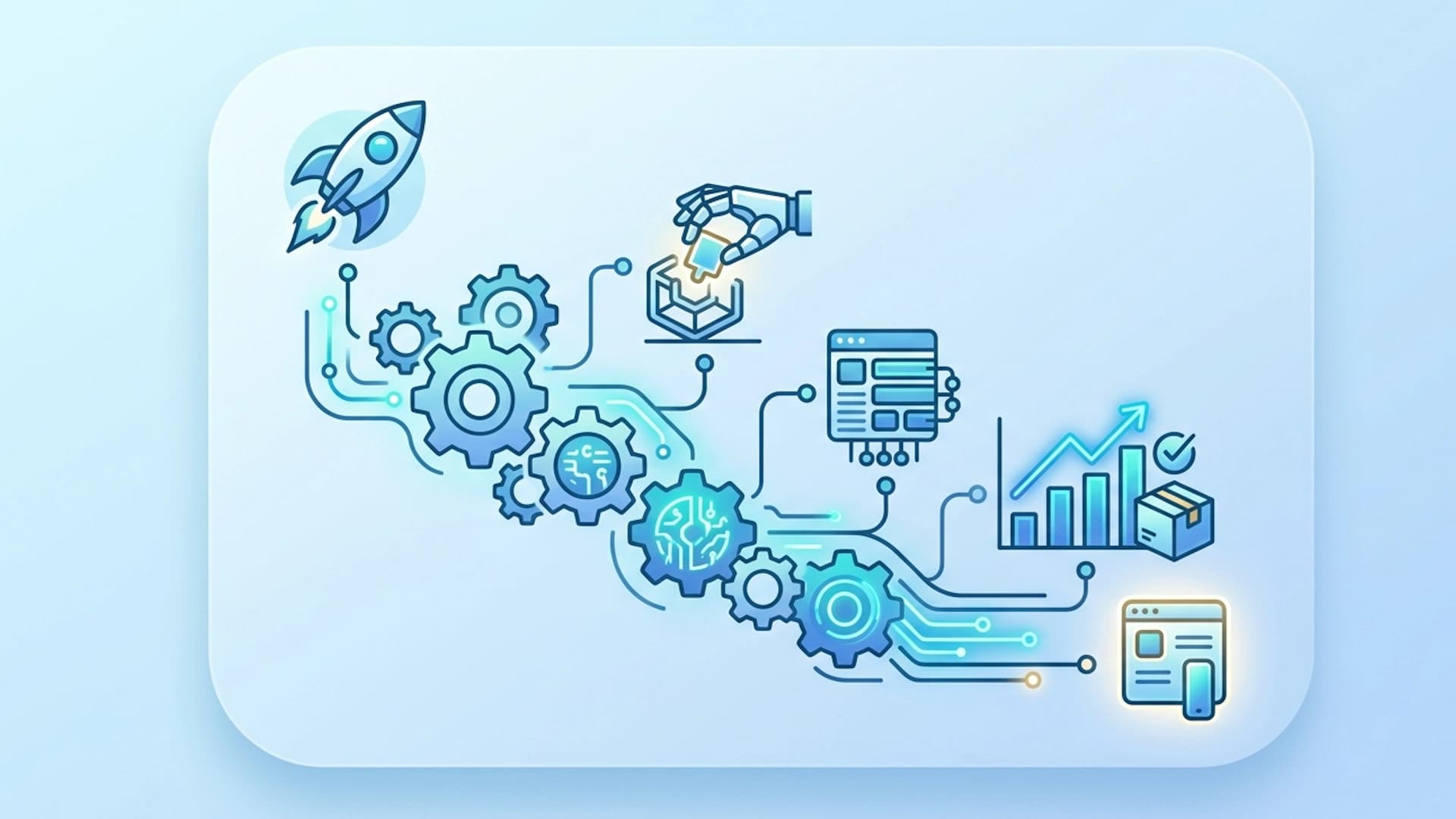
Twenty-one percent of Y Combinator's Winter 2025 batch reported codebases that were more than ninety percent AI-generated. That number would have been unthinkable two years ago. Today, founders are using AI coding tools to go from a blank screen to a working product in days instead of months. The practice even has a name now: vibe coding. But beneath the hype, the reality is more nuanced than "AI builds your app for you." Some founders are shipping real products with AI tools and getting users fast. Others are drowning in AI-generated spaghetti code that breaks the moment a real customer touches it. This guide is the practical, no-hype breakdown of how to use AI to build your startup MVP in 2026, what actually works, what doesn't, and where you still need human developers. If you're still getting familiar with the fundamentals of building an MVP, start with what every founder should know about building an MVP.
1.
2.
3.
4.
5.
6.
7.
8.
What Vibe Coding Actually Means for Founders
Vibe coding is the practice of building software by describing what you want in plain English and letting AI generate the code. Instead of writing functions line by line, you write prompts. Instead of debugging syntax errors, you tell the AI what's broken and ask it to fix it. The term was coined by Andrej Karpathy in early 2025 and has since become the defining development trend of 2026.
This is not a niche experiment. The vibe coding tools market reached $4.7 billion in 2025 and is projected to hit $12.3 billion by 2027. Developers using AI assistants report 40 to 60 percent faster prototyping. Non-technical founders who could never have built a product alone are now shipping functional MVPs without writing a single line of code themselves.
But AI does not replace all development work. It changes the economics and timelines dramatically. It makes certain types of products trivially easy to build and leaves others just as hard as before. Understanding where that line falls is what separates founders who use AI effectively from those who waste weeks generating code they cannot ship.
The AI Tools That Matter for MVP Development
The AI development landscape splits into three categories. Each serves a different type of founder and a different stage of building. For a full breakdown of how these tools affect your budget, read about how much does it cost to build an MVP.
AI App Builders
Platforms like Lovable and Bolt.new generate full working applications from text descriptions. You describe your product in plain English, and the tool produces a functional app with a frontend, backend, and database. No coding knowledge required. These are the most accessible tools for non-technical founders who want to build a working prototype to test demand before investing in custom development. The trade-off is limited customization. These tools handle standard patterns well but struggle with anything that deviates from common templates.
AI Code Editors
Cursor and Windsurf are AI-powered code editors where developers describe features in natural language and the AI writes the code within a full development environment. These are the most powerful tools available, but they require someone who understands code to use them effectively. Best for founders who have a technical co-founder or developer on the team. These tools make an experienced developer dramatically faster rather than replacing the need for one entirely.
AI Coding Agents
Claude Code, GitHub Copilot, and similar tools act as AI assistants that write, debug, and refactor code within existing projects. They can handle multi-file changes, run tests, and iterate on complex codebases. Best for development teams building custom MVPs where these tools accelerate every phase of the build. Professional MVP studios increasingly use these tools to deliver projects faster and at lower cost.
What AI Can Actually Build Today
Understanding what AI tools handle well and where they fall short saves you from wasting time on the wrong approach. If you're not sure whether you even need a full MVP yet, read about what's best for your first launch: proof of concept, MVP, or landing page.
Where AI Excels
AI tools are exceptionally good at building landing pages and waitlist apps, turning what used to take days into minutes. Simple CRUD applications like task managers, directories, and dashboards are straightforward. Basic two-sided marketplaces with standard listing and search functionality work well. Internal tools, admin panels, and form-heavy data collection apps are also strong use cases. Anything that follows common patterns and has been well-represented in AI training data tends to come out functional on the first or second attempt.
Where AI Struggles
Complex backend logic involving payment processing, real-time features, or multi-tenant architectures remains difficult. Third-party API integrations that require custom authentication flows often produce buggy results. Security-critical features like proper authentication, data encryption, and regulatory compliance cannot be reliably delegated to AI alone. Performance optimization at scale requires human expertise that AI tools do not consistently provide. Products that require unique, non-standard UI/UX patterns also tend to need significant manual refinement after AI generates the initial version.
Want more to read?
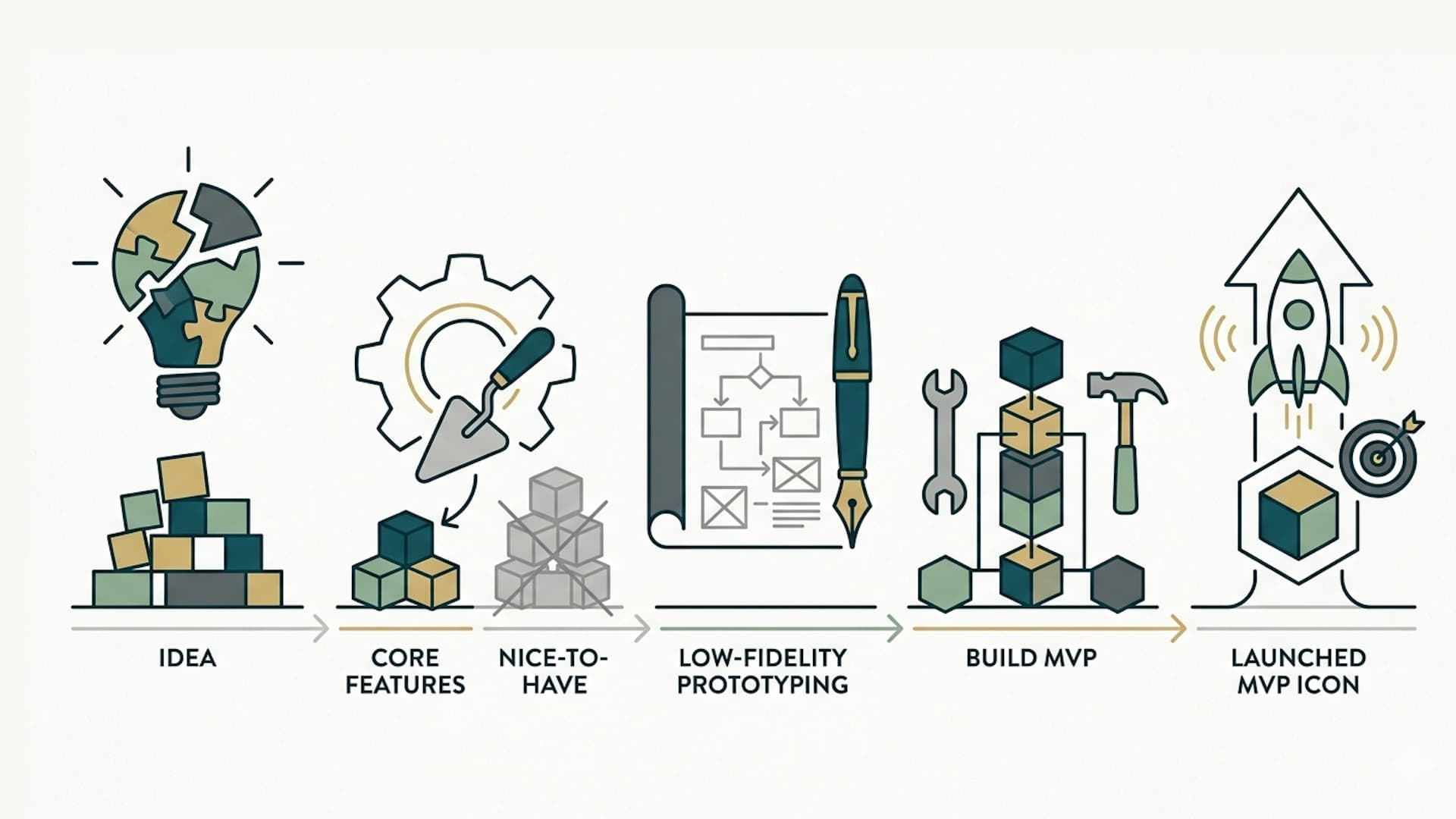
How to Build an MVP as a Non-Technical Founder
A step-by-step guide for non-technical founders to build an MVP — from validating your idea to choosing the right development path and launching in weeks.
 Read More
A Realistic Workflow: Building an MVP With AI Step by Step
Here is how founders are actually using AI tools to build MVPs that work, broken into five steps that apply regardless of which specific tool you choose.
Step 1: Validate Before You Generate
Before you open any AI tool, validate that people actually want what you plan to build. AI makes it dangerously easy to skip this step. When you can generate a working prototype in an afternoon, the temptation is to just build it and see what happens. That is still the wrong approach. A product nobody wants does not become valuable because AI built it faster. Create a simple landing page, share it with your target audience, and measure interest before you invest time in a full build. Our guide on how to use landing pages to validate startup ideas before you build walks through this process in detail.
Step 2: Define Your MVP Scope Ruthlessly
AI makes feature creep worse, not better. When adding a new feature is as easy as typing a prompt, founders add features they would never have built manually. Every additional feature is still another thing that can break, another thing users have to navigate, and another thing that dilutes focus from the core value proposition. Define the single most important user journey your MVP needs to support and build only that. You can always add more later. For more on this trap, read about the most common MVP pitfalls founders make and how to avoid them.
Step 3: Build a Working Prototype With AI
Start with an AI app builder or code editor and describe your core user journey. The process is iterative: prompt, review the output, test it, refine your prompt, and repeat. Expect three to ten iterations before the core flow works properly. Be specific in your prompts. Instead of "build me a project management tool," describe the exact screens, user actions, and data you need. The more precise your description, the better the output. Save your work frequently and test each change before moving to the next feature.
Step 4: Have a Human Developer Review the Code
This is the step that separates MVPs that survive contact with real users from those that fall apart. AI-generated code works in demo conditions. It often fails under real-world usage. A professional code review catches security vulnerabilities, identifies architectural decisions that will cause problems at scale, and ensures the codebase is maintainable if you need to hire developers later. This does not need to be expensive. A focused review from an experienced developer can be done in a few hours and saves you from discovering critical issues after your users find them first.
Step 5: Launch, Measure, and Iterate
Once your MVP is live, the rules are the same regardless of how it was built. Talk to your users. Watch how they interact with the product. Measure what matters: are people signing up, are they completing the core action, and are they coming back? Use that data to decide what to build next. Learn how to structure this process in how to collect feedback that shapes your MVP into a real product.
The Hidden Risks of AI-Built MVPs
Being honest about the downsides is not anti-AI. It is the difference between using a powerful tool wisely and using it recklessly. Watch for signs that your MVP development project is going off track, whether the code is AI-generated or not.
Code quality and technical debt. AI generates code that works but may not be well-structured, maintainable, or testable. If you raise funding and need to hire engineers, they may spend their first weeks rewriting AI-generated code before they can build anything new. The faster you generated it, the more likely it carries hidden debt.
Security vulnerabilities. AI tools do not automatically follow security best practices. Without expert review, an AI-built MVP may have exposed API keys, SQL injection vulnerabilities, improper authentication, or data handling that violates privacy regulations. These are not theoretical risks. They are common findings in AI-generated codebases.
Fragile error handling. AI-generated apps often work perfectly in the happy path and break ungracefully when users do something unexpected. Missing error handling, poor edge case coverage, and confusing failure messages are standard issues that real users will encounter within minutes of using your product.
Vendor lock-in. Some AI app builders keep your application on their platform. If they change pricing, shut down, or remove features you depend on, your product is at risk. Always confirm whether you can export your code and run it independently before committing to a platform.
Want more to read?
How Much Does It Cost to Build an MVP?
A clear breakdown of MVP development costs — from agencies and freelancers to no-code tools and MVP studios — so you can pick the right path.
When AI Tools Are Enough and When You Need a Development Team
This is the decision that matters most. Here is a straightforward framework. For a deeper comparison of build approaches, read about outsourcing your MVP vs. hiring in-house.
AI tools alone may be enough if you are validating an idea and need a basic prototype to test demand. Your MVP is a simple, single-purpose tool with standard functionality like forms, lists, and basic user accounts. You have some technical literacy and can evaluate whether the generated output actually works correctly. And you are comfortable with the possibility that the code may need to be partially or fully rewritten later when you are ready to scale.
You need professional developers if your MVP handles payments, sensitive user data, or anything involving regulatory compliance. You need integrations with third-party services like Stripe, Twilio, or OAuth providers that require careful implementation. You are building for a market where reliability directly affects trust, such as fintech, healthtech, or enterprise software. You plan to raise funding and investors will evaluate your technical foundation. Or speed to market is critical and you cannot afford to spend days debugging AI-generated issues yourself.
The Smartest Approach: AI Plus Professional Developers
The most effective strategy in 2026 is not choosing between AI and human developers. It is combining both. Use AI tools to accelerate development while experienced developers guide the architecture, review the code, and handle the parts that AI cannot reliably do on its own.
This is not a hypothetical workflow. The best MVP studios already use AI tools internally. AI handles the repetitive scaffolding, boilerplate code, and standard patterns. Human developers handle the architecture decisions, security implementation, complex integrations, and quality assurance that determine whether the product survives real-world usage. The result is faster delivery, lower cost, and higher quality than either approach alone. For founders, this means you get the speed benefits of AI without the risk of shipping a product that breaks under pressure. Read about why founders who invest in an MVP early save time and money later for more on why getting this right from the start matters.
Final Thoughts
AI tools have genuinely changed the MVP landscape. Founders who learn to use them strategically have a real advantage in speed, cost, and iteration speed. But the fundamentals of building a successful product have not changed. Validate before you build. Scope ruthlessly. Launch fast. Iterate based on real user feedback. AI makes the building part faster. It does not make the thinking part optional.
At PremierMVP, we use AI-augmented development to build MVPs faster than ever while maintaining the code quality and security that AI alone cannot guarantee. A full MVP starts at $1,999 and ships in 14 to 20 days. A landing page starts at $799 and ships in 7 to 12 days. You own 100% of the code. No equity, no hidden fees, no fragile AI-generated prototypes that fall apart under real usage. Just a production-ready product built to handle real customers from day one.
Have a business idea you want to bring to life? Book a call today with PremierMVP.
Want more to read?
Essential Checklist for Your MVP Launch
Launch your first MVP with confidence using this checklist that covers problem focus, feedback, metrics, and strategy to help you save time and learn faster.