Founders spend more time debating tech stacks than almost any other early decision. React or Vue. Python or Node. PostgreSQL or MongoDB. The conversations drag on for weeks while competitors ship products and start learning from real users. Here is the truth that experienced builders know: for an MVP, the best tech stack is the one that gets your product in front of users the fastest. Everything else is a distant second. If you're still getting familiar with the fundamentals, start with what every founder should know about building an MVP.
1.
2.
3.
4.
5.
6.
7.
8.
Why Your Tech Stack Matters (But Less Than You Think)
Your tech stack is the combination of programming languages, frameworks, databases, and tools used to build your product. It matters because it affects development speed, hiring, maintenance costs, and what your product can eventually do at scale.
But here is what most founders get wrong: they treat the tech stack decision as if it is permanent and irreversible. It is not. Successful companies change their tech stacks all the time. Twitter moved from Ruby to Scala. Facebook built its own PHP compiler. Airbnb migrated major parts of their frontend multiple times. These companies did not succeed because of their initial tech stack. They succeeded despite changing it.
For an MVP, the goal is not to pick the perfect stack. The goal is to pick a good enough stack that lets you build fast, validate your idea, and iterate based on real feedback. If your product gains traction, you will have the resources and the data to make better technology decisions later. If it does not gain traction, the tech stack was never the problem. Not sure if you even need a full MVP yet? Read about the differences between a proof of concept, MVP, and landing page to figure out the right starting point.
The Three Factors That Actually Matter
Instead of comparing every framework on the internet, focus on three things that drive 90 percent of the outcome.
Your Team's Existing Skills
This is the single most important factor and the one most often ignored. A developer who knows Python inside and out will build a better MVP in Django than they will in a trendy framework they learned from a tutorial last week. Team expertise drives development speed more than any technical advantage a framework might offer. If you are hiring a developer or agency, ask what stack they are most productive in, not what stack is theoretically best.
Your Timeline and Budget
Different stacks have different development speeds for different types of products. A simple web app can be built in days with Next.js and a hosted database. A native mobile app for both iOS and Android takes longer regardless of the framework. Your budget directly constrains your options. If you have $5,000, you are not building a custom microservices architecture. You are using a proven, opinionated framework that minimizes the number of decisions and maximizes the amount of working code per dollar spent. For a detailed cost breakdown by approach, read about how much it costs to build an MVP.
The Scalability Ceiling You Actually Need
Every tech stack has a ceiling, but that ceiling is almost always far higher than what an MVP needs. PostgreSQL can handle millions of rows. A single Next.js app on Vercel can serve thousands of concurrent users. A basic Django app handles more traffic than 99 percent of MVPs will ever see.
The mistake is optimizing for a scale you have not reached and may never reach. Build for 100 users today, not 100,000 users you might have in two years. When you hit scaling problems, that is a good problem to have, and you will have revenue and data to solve it properly.
The Most Popular MVP Tech Stacks in 2026
Here are the stacks that MVP studios, agencies, and experienced startup developers actually use, along with what each is best suited for.
Next.js + Node.js + PostgreSQL
This is the dominant stack for web-based MVPs in 2026. Next.js handles both the frontend and API routes in a single codebase, which means fewer moving parts and faster development. PostgreSQL is battle-tested, free, and handles everything from simple CRUD apps to complex relational data. Deployment on Vercel or Railway takes minutes. Best for SaaS products, dashboards, marketplaces, and any web application where speed to launch matters most.
Python (FastAPI or Django) + PostgreSQL
Python remains the go-to choice for data-heavy products, automation tools, and anything involving machine learning or AI features. FastAPI is lightweight and fast to develop with. Django is more opinionated and includes built-in admin panels, authentication, and ORM out of the box. Best for products where backend logic is the core value, data processing is central, or you plan to integrate AI capabilities.
React Native or Flutter
For MVPs that must be native mobile apps, React Native and Flutter are the two realistic options. Both let you build for iOS and Android from a single codebase. React Native is the better choice if your team already knows JavaScript and React. Flutter is the better choice if you want more control over UI and performance. Best for products where the mobile experience is the core value proposition and a web app will not suffice.
No-Code Platforms (Bubble, Webflow, Glide)
No-code tools let non-technical founders build functional prototypes without writing code. Development is fast and costs are low. The trade-offs are limited customization, performance constraints, and platform lock-in. Best for validating demand before investing in custom development. Less ideal for the product you plan to scale with.
Want more to read?
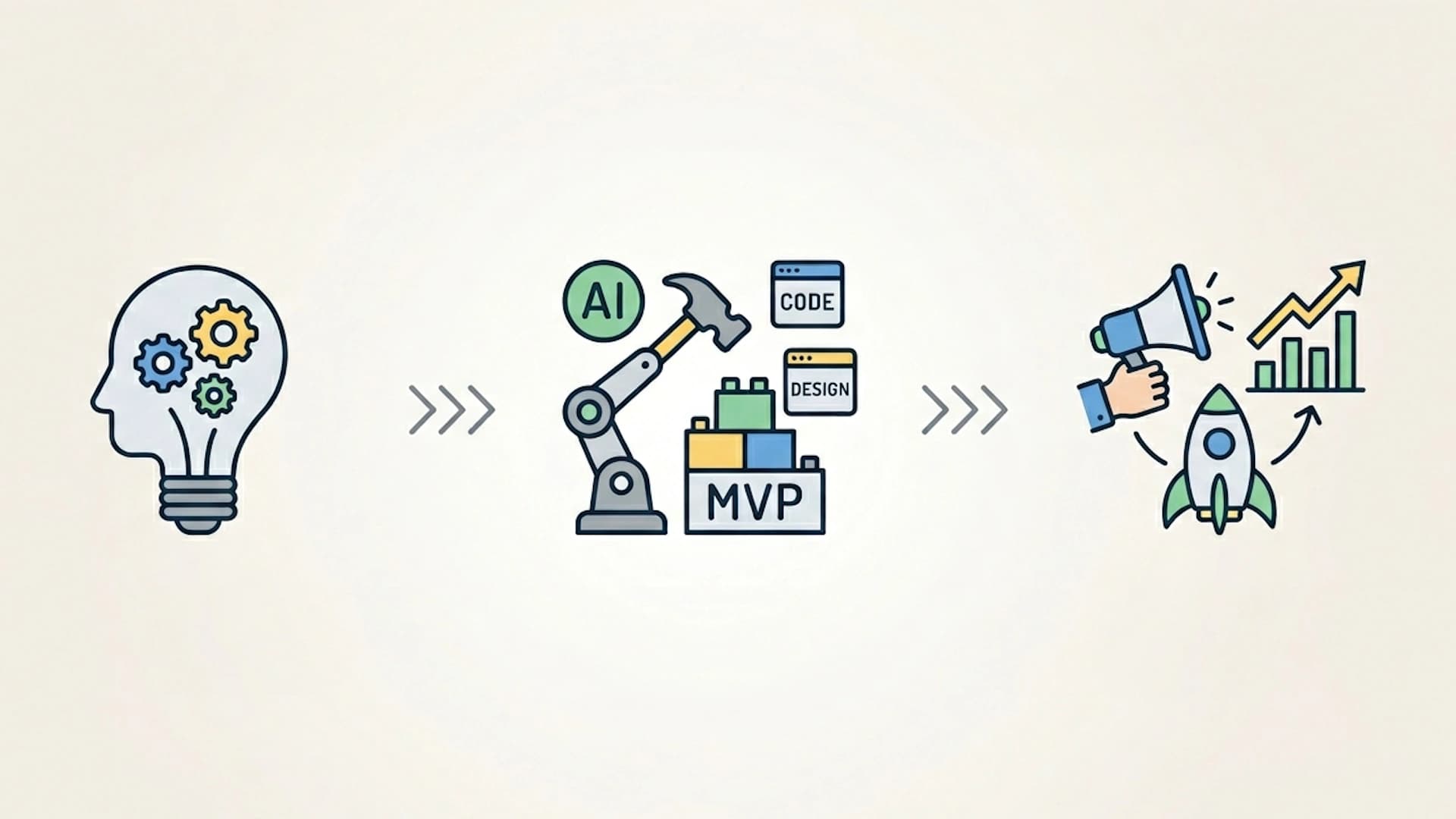
How to Use AI to Build Your Startup MVP
A practical guide to using AI coding tools like Cursor, Lovable, and Claude Code to build your startup MVP faster — what works, what doesn't, and when you still need human developers.
 Read More
Frontend, Backend, and Database: A Simple Decision Framework
If you are making this decision yourself or evaluating a developer's recommendation, here is a straightforward way to think about each layer.
Frontend
Your frontend is what users see and interact with. For web apps, React (via Next.js) is the default choice in 2026. It has the largest ecosystem, the most available developers, and the most mature tooling. Unless you have a specific reason to choose something else, React is a safe bet. For mobile apps, start by asking whether you truly need a native app. A responsive web app works on every device and is significantly cheaper and faster to build. Only go native if your product fundamentally requires device features like camera access, push notifications, or offline functionality.
Backend
Your backend handles business logic, data processing, and API endpoints. For most MVPs, you do not need a separate backend at all. Frameworks like Next.js include API routes that handle backend logic within the same project. This simplifies development, deployment, and debugging. If your product requires heavy backend processing, Python with FastAPI gives you clean APIs with minimal boilerplate. If you are building something with complex real-time features, Node.js with a framework like Nest.js provides the structure you need.
Database
For nearly every MVP, PostgreSQL is the right answer. It is relational, which means your data stays structured and queryable as your product evolves. It is free, open source, and supported by every hosting platform. Hosted options like Supabase and Neon give you a managed PostgreSQL database with zero configuration in minutes. MongoDB makes sense if your data is genuinely unstructured or document-oriented. For most MVPs, it is not, and choosing MongoDB adds complexity without benefit.
Common Tech Stack Mistakes Founders Make
These are the patterns that waste the most time and money. Avoid them and you are already ahead of most first-time founders. For a broader list of early-stage traps, read about the most common MVP pitfalls founders make and how to avoid them.
Overengineering From Day One
Microservices, Kubernetes, event-driven architectures, message queues. These are tools for companies with millions of users and dozens of engineers. An MVP needs a single deployable application with a database. Adding infrastructure complexity before you have product-market fit is burning money to solve problems you do not have.
Chasing Trends Instead of Using What Works
A new JavaScript framework launches every month. A new database promises to be ten times faster than everything else. Ignore the hype cycle. Mature, boring technology is what ships reliable products. The companies behind React, PostgreSQL, and Python have been supporting them for years and will continue to for years more. The hot new framework from last month might not exist next year.
Ignoring Your Team's Expertise
If your developer knows Ruby on Rails, do not make them learn Go because a blog post said it is faster. The productivity loss from learning a new stack during an MVP build is enormous. A developer working in a familiar stack ships in weeks. A developer learning a new stack while building ships in months, with more bugs.
Premature Optimization
Spending days configuring caching layers, CDN rules, and database indexes before you have your first user is premature optimization. Build the simplest version that works. Optimize when you have real performance data from real users telling you what is actually slow.
When to Use No-Code vs Custom Code
This decision comes down to what you are trying to achieve and how far you plan to take the product. For a deeper look at cost differences, read about how much it costs to build an MVP.
Choose no-code if you are testing whether anyone wants your product before investing in development. Your product is a straightforward directory, marketplace, or form-based tool. You have zero technical resources and need something live within days. You are comfortable rebuilding later if the product gains traction.
Choose custom code if your product requires custom logic that no-code platforms cannot support. You need integrations with third-party APIs like payment processors or communication tools. Security and data privacy are critical requirements. You want a codebase you own and can scale without platform constraints. You plan to raise funding, as investors evaluate technical foundations. For non-technical founders navigating this decision, our guide on how to build an MVP as a non-technical founder walks through the options in detail.
Want more to read?
How to Build an MVP as a Non-Technical Founder
A step-by-step guide for non-technical founders to build an MVP — from validating your idea to choosing the right development path and launching in weeks.
How AI Tools Are Changing the Tech Stack Decision
AI coding tools like Cursor, Claude Code, and Lovable have shifted the tech stack conversation in 2026. These tools are most effective with popular, well-documented frameworks because they were trained on the largest volume of code in those ecosystems. This means choosing React, Next.js, Python, or PostgreSQL gives you an additional advantage: AI tools generate better, more reliable code for these stacks than for niche alternatives.
For founders working with developers, AI tools accelerate every phase of the build when paired with mainstream technology. For non-technical founders, AI app builders can generate working prototypes without any coding at all, though the output still benefits from professional review before going to production. The practical impact is that choosing a popular tech stack in 2026 is not just about hiring and community support. It is also about maximizing the productivity gains from AI-assisted development. Read our full breakdown of how to use AI to build your startup MVP for a deeper look at what these tools can and cannot do. If you are deciding between building in-house and working with external developers, our guide on outsourcing your MVP vs. hiring in-house covers the trade-offs.
Final Thoughts
The best tech stack for your MVP is the one that gets a working product into the hands of real users the fastest. Choose based on your team's skills, your budget, and the type of product you are building. Ignore hype, resist overengineering, and remember that every successful company changed their tech stack at least once on the way to scale. The stack does not make the product. The product makes the product.
At PremierMVP, we build MVPs using battle-tested technology chosen specifically for speed, reliability, and long-term flexibility. A full MVP starts at $1,999 and ships in 14 to 20 days. A landing page starts at $799 and ships in 7 to 12 days. You own 100% of the code. No equity, no hidden fees, no tech stack debates that delay your launch by months. Just a production-ready product built to handle real customers from day one.
Have a business idea you want to bring to life? Book a call today with PremierMVP.
Want more to read?
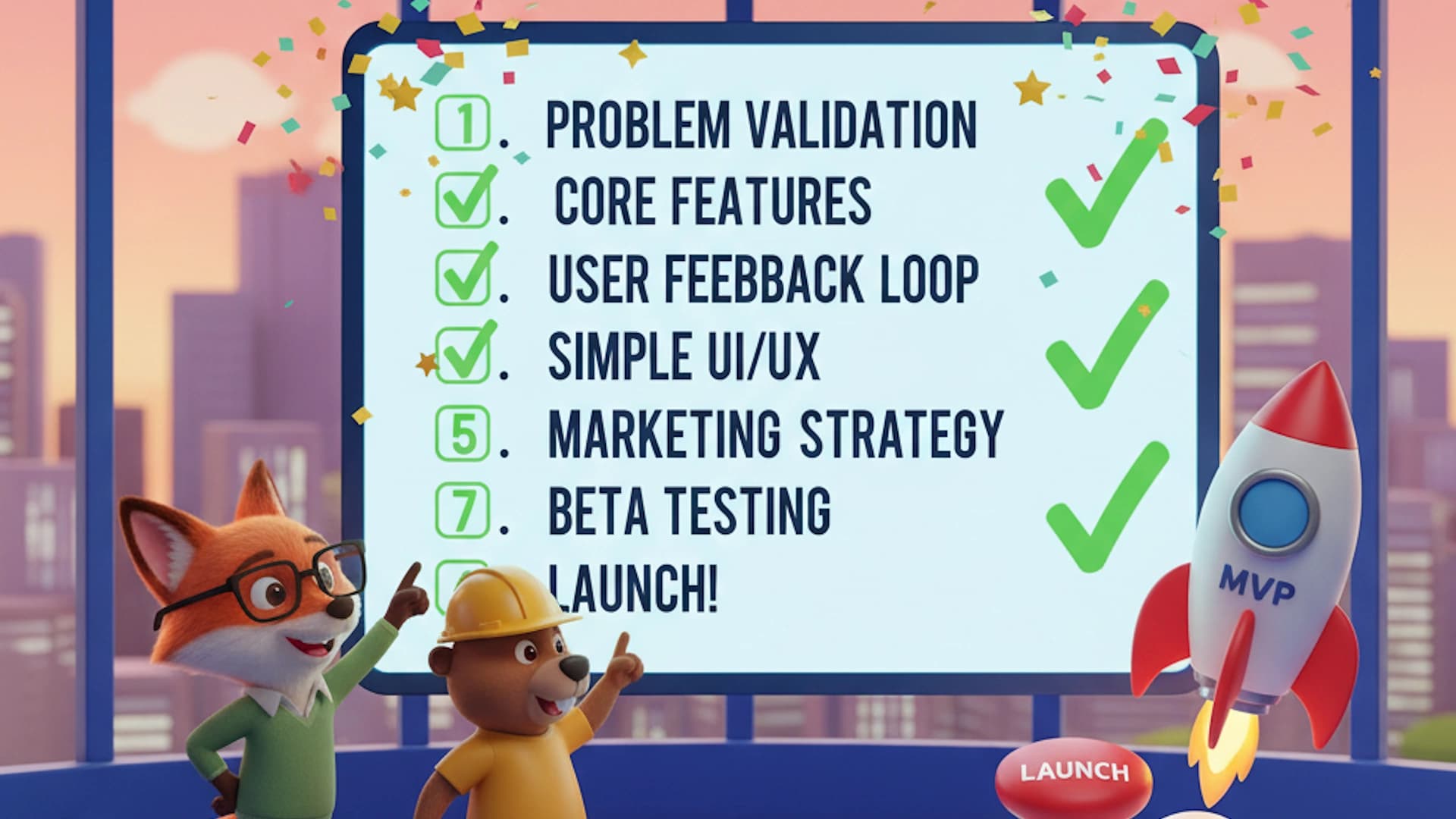
Essential Checklist for Your MVP Launch
Launch your first MVP with confidence using this checklist that covers problem focus, feedback, metrics, and strategy to help you save time and learn faster.